If you hear manjar branco and picture a creamy coconut pudding, you may be in for a surprise. Long before coconut became associated with many modern versions of this dessert, manjar branco was a very different kind of dish. One historic Portuguese version was made with milk, rice, sugar and finely shredded chicken. Wait… chicken in a dessert? Exactly. It sounds unusual today, but these were medieval times, after all!
At Taste Porto, we love the stories hiding behind traditional Portuguese food. Recipes aren’t simply instructions telling us what to put in a pot. They are little records of how people lived, what ingredients were available, what they believed, and what they considered a delicacy. The story of manjar branco is exactly the kind of food history we love sharing on our Porto Food Tours, too.
What Is Manjar Branco
Manjar branco is a traditional Portuguese dish whose name roughly translates as “white delicacy.” It has a long history and many variations. According to the book Cinco Séculos à Mesa, its basic ingredients included milk or almond milk, sugar, rice or rice flour, and chicken.
Over the centuries, versions of manjar branco appeared across Europe and eventually made their way to Brazil. The name itself comes from the French blancmanger, a dish with medieval European roots.
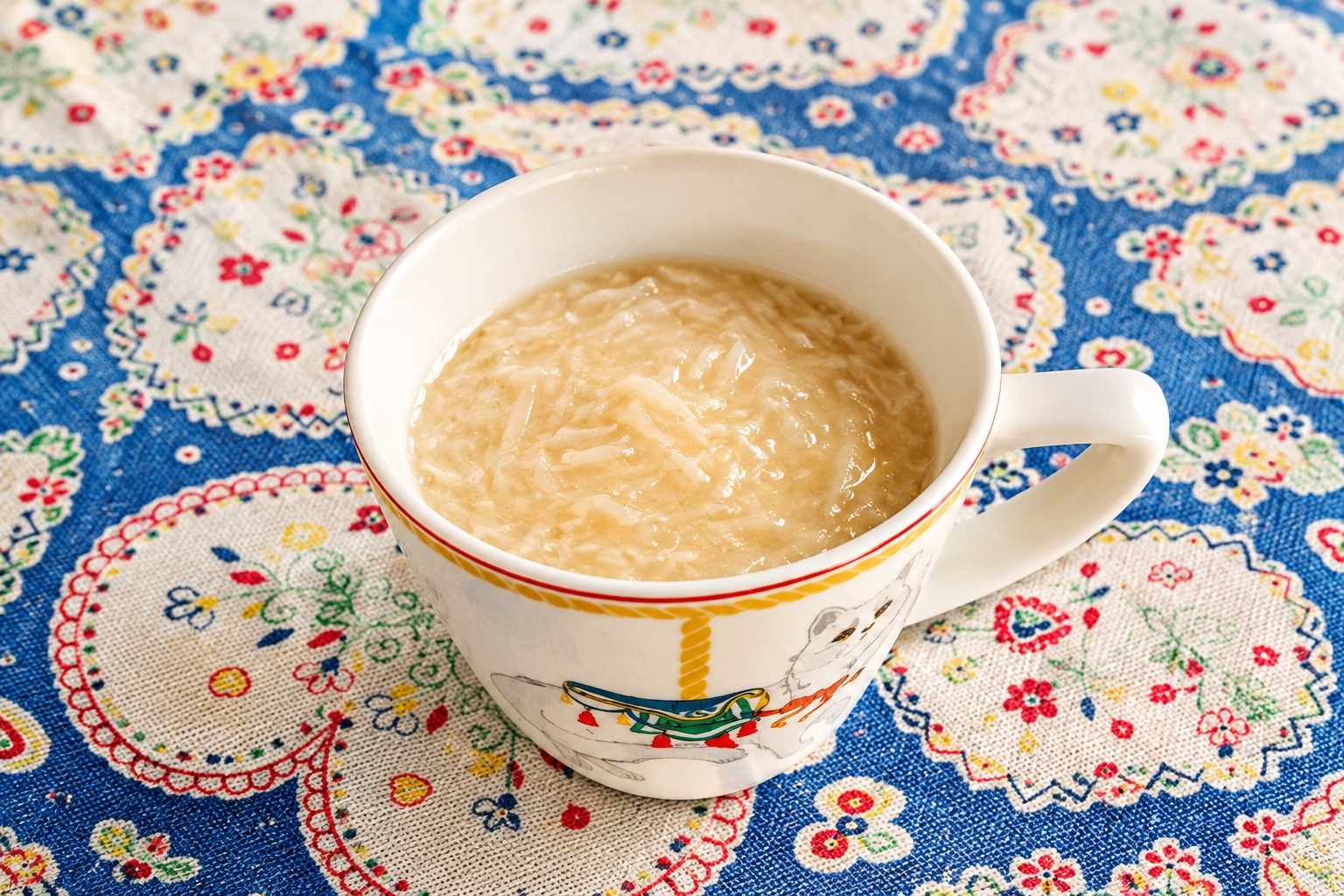
In the historic Portuguese version we’re making here, chicken is cooked until tender, shredded into very fine strands, and incorporated into a sweet, creamy mixture of milk, rice and sugar. The result is something between a dessert, a historical curiosity and, most importantly, an edible piece of Portuguese heritage.
The Story of Manjar Branco Stretches Back Centuries
According to the book Cinco Séculos à Mesa, one of the earliest known written versions of blancmanger appears in a Danish manuscript as a translation of a German recipe dating back to 1244.
But the recipe didn’t stay the same. Religious traditions played an important role in how manjar branco evolved. During periods of fasting and Lent, cooks adapted the dish by replacing chicken with cooked and strained fish. And they didn’t stop there.
In 1680, Portuguese cookbook author Domingos Rodrigues suggested replacing the chicken with lobster. Centuries later, French chef Lucas Rigaud included a Portuguese-style manjar branco in his cookbook Cozinheiro Moderno. The recipe then crossed the Atlantic. In 1841, a version appeared in O Cozinheiro Imperial, one of the earliest cookbooks published in Brazil.
So, what looks like a simple Portuguese pudding actually has a history that crosses Denmark, Germany, France, Portugal and Brazil. That’s quite a journey for one bowl of dessert, isn’t it?
How to Make Traditional Manjar Branco
The manjar branco recipe we’re sharing here comes from Cinco Séculos à Mesa: 50 Receitas com História, by Guia Cândido, a book exploring recipes that have travelled through Portuguese history. So, let’s take a step back in time and discover what manjar branco really was.
Ingredients
This historic recipe serves approximately 8 people.
- 1 chicken breast
- Water, as needed
- 460 g rice or 1 cup rice flour
- 1.4 litres milk
- 200 g sugar
- ½ teaspoon salt
- Extra sugar, for dusting
A Note About the Rice
The original recipe gives you two options: rice or rice flour. If you’re using rice flour, you can add it directly to the milk. If you’re using whole rice, cook it first until tender, then pass it through a sieve before adding it to the mixture. This helps create the smooth, creamy texture of the finished manjar branco.
Manjar Branco Recipe
- Cook the Chicken
First, place the chicken breast in a pot of water seasoned with salt. Cook until tender, taking care not to overcook it. Ideally, you want the meat to remain moist rather than becoming dry. Once it is cooked, pass it through cold water and remove any skin or bones. Then, shred the chicken into very fine strands. This part matters. You don’t want obvious chunks of chicken in your manjar branco. Instead, the meat should become almost invisible once incorporated into the creamy mixture. - Prepare the Rice
If you’re using rice flour, you can skip this step. However, if you’re using whole rice, cook it until completely soft. Once the rice is ready, pass it through a sieve to create a smooth rice mixture. This, in turn, helps give the dish its characteristic creamy consistency. - Combine the Milk and Sugar
Next, pour the milk into a large saucepan and add the sugar. Heat gently, stirring until the sugar has completely dissolved. At this point, add the finely shredded chicken and the rice or rice flour. Stir well to combine. - Cook Slowly
Now comes the part that requires a little patience. Cook the mixture over low heat, stirring continuously. As it cooks, the rice will gradually thicken the milk, so keep stirring to prevent the mixture from sticking to the bottom of the pan. Continue stirring and cooking until the manjar branco becomes thick and creamy. Finally, taste it and, if you think it needs a little more sweetness, add some extra sugar. - Serve Your Manjar Branco
Once the mixture has reached a creamy consistency, remove it from the heat. Then, give it one final stir before dividing it between individual serving dishes or cups. To finish, add a light dusting of sugar
And there you have it: a traditional Portuguese manjar branco, prepared from a historic recipe.
A Dessert You Probably Won’t Find in Porto Today
You probably won’t find this version of manjar branco on every Portuguese dessert menu today. And that’s precisely what makes it worth discovering. Recipes change as they travel between countries, generations and kitchens. Ingredients become available or disappear. Religious traditions influence what people cook. Cooks adapt recipes to local tastes. Manjar branco is a wonderful example of this and deserves a place on any list of lost arts or recipes worth preserving.
Turn on the Stove!
Sometimes, discovering that history starts with something completely unexpected. Like chicken in a dessert. So go on. Give this historic manjar branco recipe a try.
Bom apetite… and welcome to the stranger, sweeter side of Portuguese food history!
With love,
Your Foodie Friends in Porto