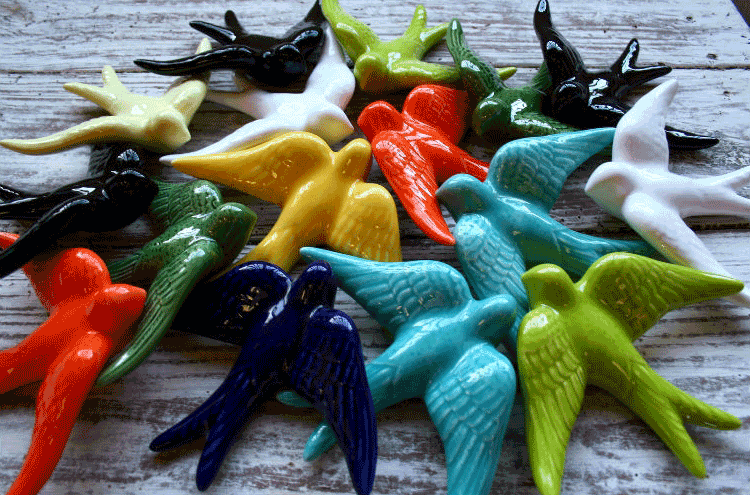
“Can you explain the deal with that little black ceramic bird I keep seeing everywhere?” We get this question a lot. In fact, we’ve even talked about the Portuguese swallow with the National Geographic crew.
When you come to Porto, you’ll start noticing it almost immediately… in tiles, graffiti, shop windows, and ceramic pieces: a small black bird, quietly watching over the city. Not just Porto, actually. You’ll find it all across Portugal.
For generations, Portuguese children learned about it in school. Every spring, as the swallows returned, so did the children’s creative projects inspired by this bird.
But why this bird?
And why has it become such a powerful symbol? One of our guests asked us exactly that, so we went digging!
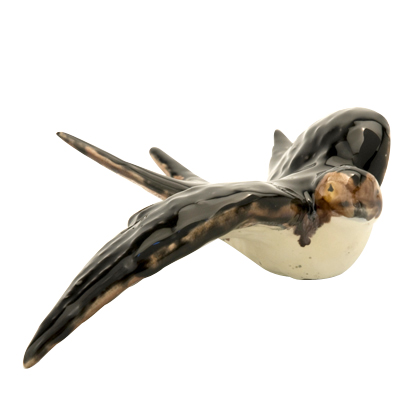
The bird is a swallow — andorinha in Portuguese — and its story as a national symbol begins in 1891, with one of Portugal’s most iconic artists, Rafael Bordallo Pinheiro.. That year, he created a series of ceramic swallows. They quickly found their way into Portuguese homes, becoming a symbol of what a Portuguese house should feel like (something that still resonates today).
Why did they become so popular? No one knows for sure. But it likely has something to do with love.
Swallows are migratory birds that return to the same place year after year. They’re also known for choosing a single partner for life. Over time, this gave the swallow its meaning: a symbol of home, family, love, fidelity, and loyalty. Ceramic swallows began to be exchanged between lovers, placed above doorways, and passed down through generations. And the rest, as they say, is history.
Curious to learn more?
Join us on one of our Porto walking tours and we’ll share the stories, symbols, and small details that give Porto its soul — the kind you only discover by walking the city with locals who know it well.
With love,
Your Friends in town